
 English
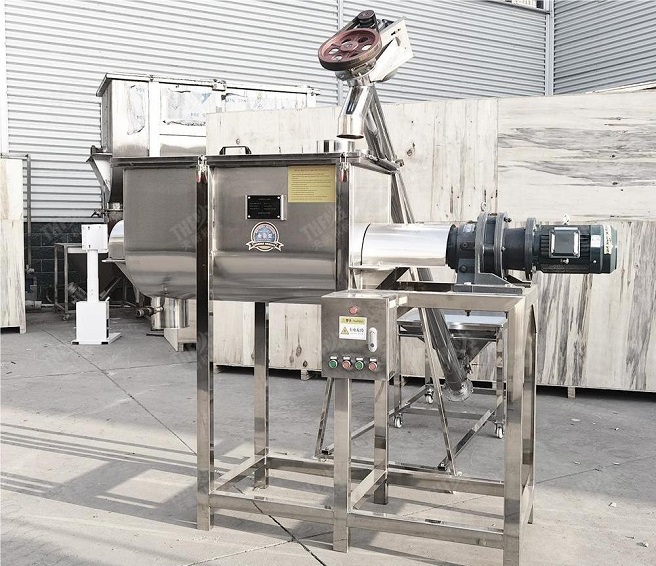
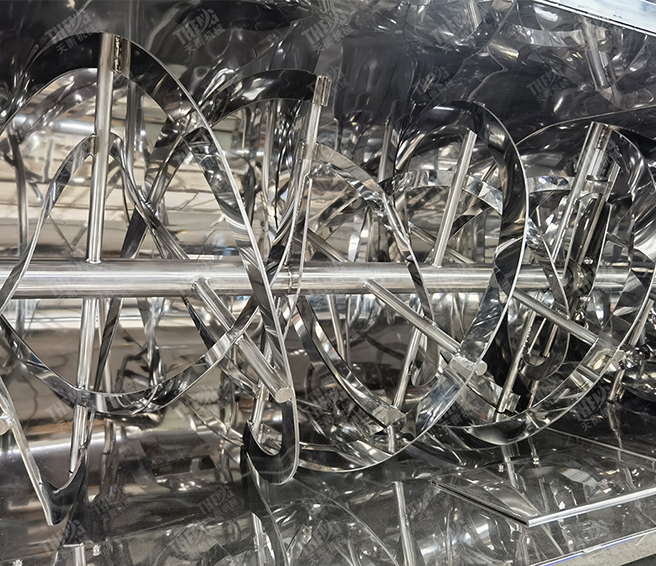
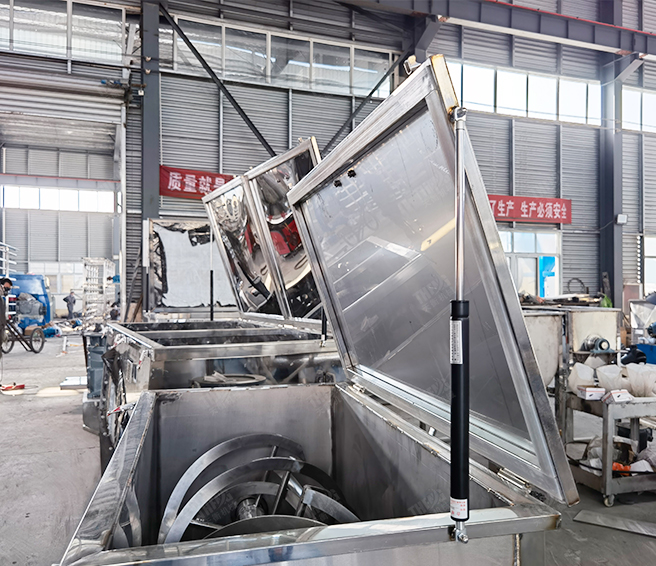
The twin-screw mixer is a widely used mixing equipment in industries such as chemical engineering, food, pharmaceuticals, and building materials. It achieves efficient mixing, stirring, and conveying of materials through two intermeshing and counter-rotating screw shafts. Its core advantages lie in high uniformity of mixing, large processing capacity and strong adaptability, capable of handling a wide range of materials from powder to viscous paste.
Mechanical inspection: Confirm that the spiral blades are not severely worn or deformed, and that the fastening bolts are not loose.
Lubrication inspection: Check whether the oil levels at lubrication points such as the reducer and bearings are normal.
Cleaning inspection: Ensure that there is no residual material in the stirring tank, especially the different materials from the last operation.
Sealing inspection: Check whether the sealing device at the shaft end is intact to prevent material leakage.
Load monitoring: Pay attention to the motor current. Abnormal increase may indicate overload or increased mechanical resistance.
Sound monitoring: Pay attention to abnormal noises, which may indicate bearing damage or screw interference.
Temperature check: Regularly touch the bearing housing and the reducer housing. The temperature should not exceed 65℃.
Vibration observation: Abnormal vibration may indicate imbalance or loose components.
Thorough emptying: After each use, completely remove the materials in the tank to prevent caking or cross-contamination.
Cleaning and maintenance: Select the appropriate cleaning method (dry cleaning, wet cleaning or solvent cleaning) based on the characteristics of the material.
Status record: Records abnormal conditions and maintenance operations during this run.
Check all fasteners, especially the spiral connection bolts
Clean the dust and debris on the surface of the drive unit
Check the tension of the drive belt (if applicable)
Check the wear condition of the spiral blades and measure the gap with the groove wall
Clean the vent cap of the reducer
Check if the electrical wiring is loose
Change the lubricating oil of the reducer (change it after the first 300 hours of use, and then every 2,500 hours)
Check the bearing grease and replenish or replace it if necessary
Calibrate the coaxiality and parallelism of the screw shaft
Conduct a comprehensive disassembly inspection and evaluate core components such as spiral blades, shafts, and bearings
Check the wear condition of the inner lining of the tank
Test the performance of the sealing system and replace the sealing parts
Check the levelness of the equipment and the installation foundation
Possible causes:
1. Material overload or excessively high viscosity
2. Bearing damage
3. Foreign object jamming
Solution: First, try to reduce the feed rate; If there is no improvement, the machine needs to be shut down to check the condition of the bearings and clear any possible foreign objects.
Possible causes:
1. The spiral blades are unevenly worn
2. Uneven feeding
3. The rotational speeds do not match
Solution: Inspect and replace severely worn blades, adjust the feeding system to ensure uniformity, and at the same time check if the transmission device is functioning properly.
Possible causes:
The bearing is damaged
2. The screw interferes with the tank body
3. Loose fasteners
Solution: Stop the machine immediately, check and tighten the loose parts in sequence, measure the gap between the screw and the tank body, and replace the damaged bearings if necessary.
Possible causes:
1. Wear of the seal
2. Journal wear
3. Improper installation
Solution: Replace the worn seals, inspect the condition of the journal and carry out repair or replacement, and readjust the installation accuracy.
Regularly inspect the wear of the blades. When the thickness decreases by 30%, replacement should be considered
Ensure that the parallelism error of the two spiral shafts does not exceed 0.1mm/m
When rotating in reverse, a gap of 1 to 3mm should be maintained between the blades
Use high-temperature lithium-based grease and replenish it every 500 hours of operation
Pay attention to dust-proofing the sealed bearings to prevent materials from entering
When replacing bearings, it is necessary to ensure that the fit tolerance with the shaft meets the design requirements
Use gear oil of the specified grade
The oil must be changed after the first 300 hours of operation
Regularly check the oil seal to prevent oil leakage
Mechanical seals must ensure the unobstructed flow of the cooling system
The packing seal should be moderately compressed, allowing for a small amount of leakage for lubrication
Regularly check the wear condition of the sealing surface