
 English
On the fish feed production line, the pulverizer, the extruder, and the dryer are usually the focus of customers’ attention – they determine whether the feed can be formed, whether the maturation process is sufficient, and whether the appearance is good. However, what truly affects the breeding results, customer reputation, and long-term profits often lies in two seemingly “ordinary” processes: raw material mixing and quantitative packaging.
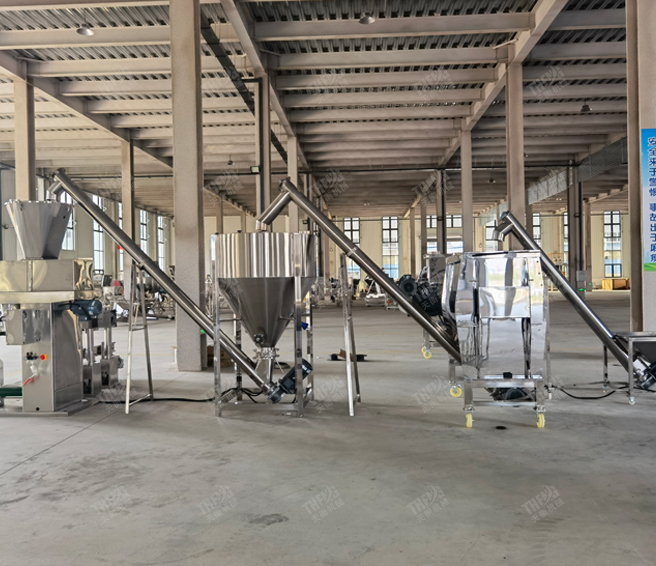
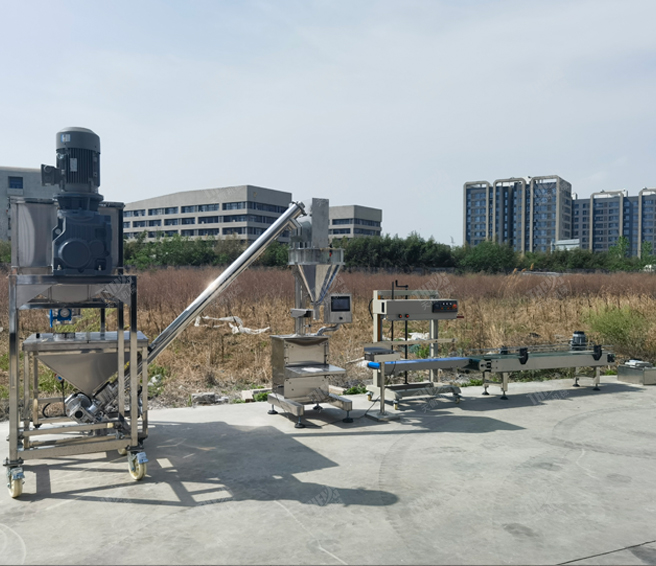
Automatic matching conveying mixing and packaging production line
Automatic Feed Mixing Packaging Platform
Mixing: The Genetic Layer That Determines the “Intrinsic Quality” of Feed
The essence of fish feed is “precise nutrition” – each pellet should contain the same proportion of protein, fat, vitamins, and minerals as specified in the formula. The task of mixing is to achieve a microscopic level of uniform distribution of up to a dozen raw materials (fish meal, soybean meal, flour, oil, additives, etc.) within a very short period of time.
If the mixing is not thorough, within the same batch of feed, the nutritional distribution will be uneven. For example, particle A may have an excessive protein content while particle B is severely lacking. → After the fish consume this feed, some fish may have excessive nutrition (bearing heavy metabolic burden and polluting the water), while others may suffer from malnutrition (slow growth and inconsistent size). If the distribution of vitamins or drugs is uneven, it may result in a reduced preventive effect in the mild cases or even lead to poisoning in the severe cases due to excessive content.
At present, the most pressing problem for overseas aquaculture is the high cost of feed. If the mixing is done well, each piece of feed is close to the “ideal nutritional ratio”, and the conversion efficiency after the fish consume it is high, with less residual nutrients in the feces. However, uneven nutrition means that fish need to eat more feed to obtain sufficient essential nutrients, resulting in an increase in feed coefficient; the undigested nitrogen and phosphorus are discharged into the water body, causing severe water pollution, and facing increasingly strict environmental fines.

Packaging: The Final “Profit Inspection Gate” on the Production Line
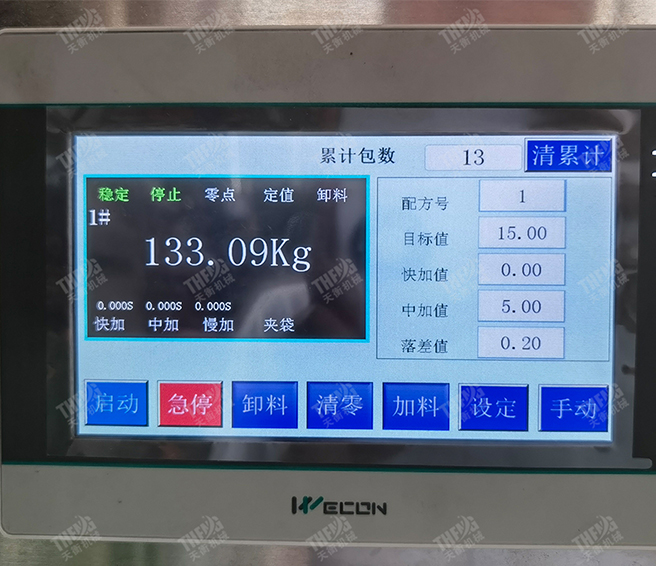
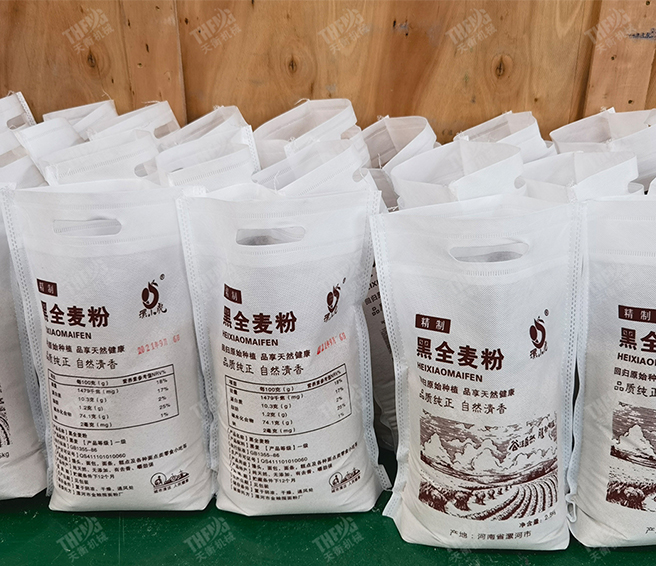
This is a very realistic calculation: A production line with an annual output of 10,000 tons, assuming each bag has a packaging size of 25kg, approximately 400,000 bags are packaged per year. If the “dynamic accuracy” of the packaging scale is ±2% (the actual value of many low-end devices), this means that, based on the maximum positive deviation, each bag is overfilled by 500 grams, resulting in a “free gift” of 200 tons of feed per year. At the current average price of fish feed being approximately $600 per ton, the annual loss of pure profit is $120,000. And a good automatic packaging machine often has a price difference of only a few thousand dollars. Loss is pure profit, and equipment with inaccurate packaging is even a “chronic blood loss”.
The packaging equipment may seem simple, but its integration with upstream storage bins, downstream sewing/sealing, conveying, and palletizing equipment involves a large number of system integration details, which affect the entire production line. For example: if the packaging speed cannot keep up with the outflow speed of the upstream equipment, it will cause spillage in the storage bins and the production line will be forced to slow down; if the sealing method is chosen wrongly (for instance, exporting to Europe but using ordinary sewing instead of hot-melt adhesive sealing), it will cause the containers to get damp and break during maritime transportation.

Summary
On the fish feed production line, the actual cost is not the purchase price of the equipment, but rather: waste caused by unevenness (low feed utilization rate, uneven growth); losses due to out-of-control precision (over-delivery of feed, customs risks); and opportunity costs resulting from downtime and maintenance (if production is interrupted for one day, how much is the loss?) . Mixing and packaging are precisely the two “cost black holes” where the most costs are concentrated, and they are also the two key points that customers care about the most when making repeat purchases.
For feed producers, achieving a uniformity of mixing with a CV (coefficient of variation) of no more than 5% and maintaining a dynamic packaging accuracy within ±1% is not just an enhancement but rather a ticket to enter the market competition.