
 English
While your production line was still using manual ingredient mixing and open-pouch packaging, the neighboring company had already reduced the packaging section from 8 people to just 2 people through an automated line, slashing the per-ton cost by 30%. You began to wonder: I also want to adopt automation, but how much money should I invest and to what extent should I go in order to be considered “worth it”?
There is no right answer to this question. A small factory with an annual capacity of 50,000 tons and a large factory with an annual capacity of 500,000 tons have very different definitions of “automation”.
Gypsum Plaster Mortar Production Line
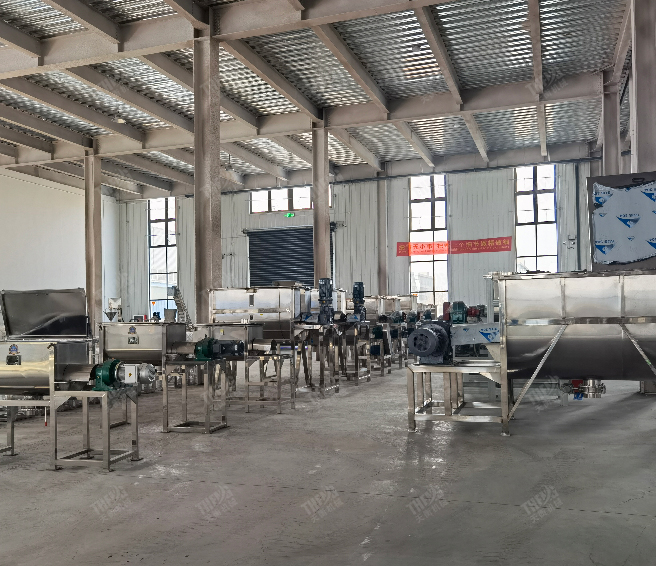
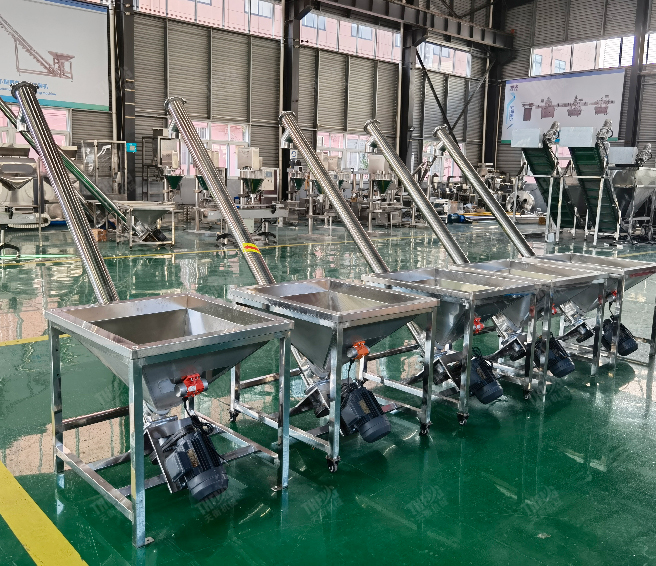
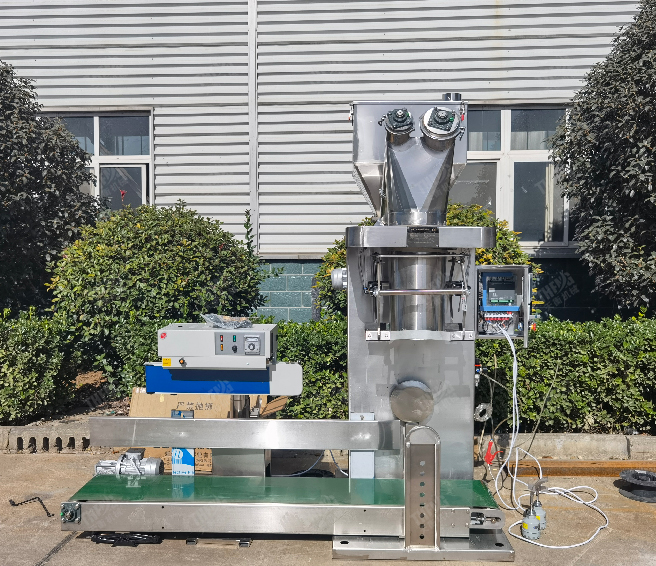
Dry mortar production line according to the degree of automation, can be divided into simple type, semi-automatic type, automatic type three categories.
Simple type: The production line consists of a non-gravity mixer + storage bin + packaging machine. It has the lowest investment threshold, but the drawback is that it is a “human-operated production line”. Raw materials are manually measured, manually added, and manually assisted in packaging. The working environment has a lot of dust, and the output is limited. It is suitable for initial market exploration, but in the long run, the labor costs and environmental pressure will increase significantly.
Semi-automatic type: The production line includes a mixer + conveyor + storage bin + dust removal + packaging machine. This is the most widely used option at present. The core upgrade lies in adding an automatic measurement system and dust collector, and improving the automation level of the batching and conveying processes. The equipment occupies 20-30 square meters, requires an investment of 10-20 ten thousand yuan, has a production capacity of 3-8 tons per hour, and requires 3-5 operators. If your orders are stable but you are unsure whether the production capacity will increase significantly in the next few years, this level is the most reliable “middle route”.
Fully automatic type: The production line includes intelligent batching + automatic packaging + palletizing. It has the most complete configuration – from material storage, batching, mixing, packaging to palletizing, all are controlled by PLC microcomputers. It supports 999 types of formula storage and can switch products with one click. One operator can manage one line. The control system can also be remotely monitored and data managed. However, the investment for this configuration is the highest. The equipment price can reach 200-500 million yuan level. It is suitable for medium and large-sized enterprises with an annual production capacity of over 50,000 tons.
The higher the degree of automation, the higher the upfront investment, but the lower the long-term operating cost. Judging “is not cost-effective”, the key to see the investment payback period.
A real data from a 100,000-ton dry powder mortar production enterprise: After introducing automatic batching + automatic packaging + robot palletizing, the number of workers in the packaging section was reduced from 6-8 to 2-3, and the single-ton packaging cost decreased by 30%. The investment payback period was generally within 2-3 years.
How to calculate this? Suppose a packaging worker earns 50,000 yuan per year, then 6 people would make 300,000 yuan a year. After full automation, only two people are needed, saving 200,000 labor costs a year. In addition, due to the improvement in measurement accuracy, the waste of raw materials was reduced, and the loss from returns due to improved packaging qualification rate was also reduced. It is reasonable to say that the equipment cost can be recovered within 2-3 years. The equipment itself has a lifespan of 8-10 years, and the following years are all pure profits.
1. Environmental Compliance. Whether it’s a simple type or a fully automatic type, a dust removal system is indispensable. The entry of the raw material conveyor and the discharge outlet of the packaging machine are the areas most prone to dust. Bag-type pulse dust collectors are needed to handle the dust, and the dust emission must comply with national standards. If the dust removal is not done properly on the simple line, environmental checks may lead to rectification or even shutdown – this is itself a huge hidden cost.
2. Product Structure. If you only produce one or two types of common mortars (such as masonry mortar and plastering mortar), a semi-automatic line is sufficient. However, if the product line involves multiple varieties such as special mortars, insulation mortars, tile adhesives, and putty powder, frequent formula changes are required, and the efficiency of equipment replacement needs to be considered.
3. Expandability. One important advantage of a semi-automatic line is its expandability. This year, we can use a semi-automatic production line. Next year, when orders come in, we can add automatic packaging and a palletizing system step by step. Investing in stages and recovering the investment gradually reduces the financial pressure significantly. In contrast, a fully automatic line is a one-step solution, although it has the highest long-term efficiency, but the initial capital occupation is large.
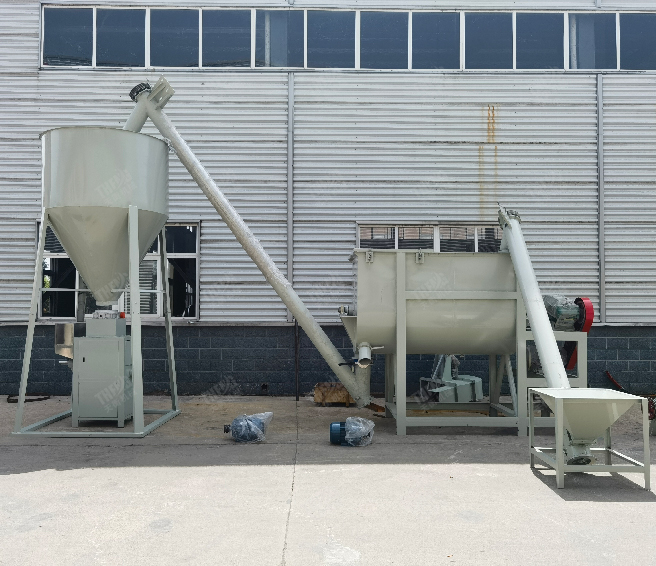
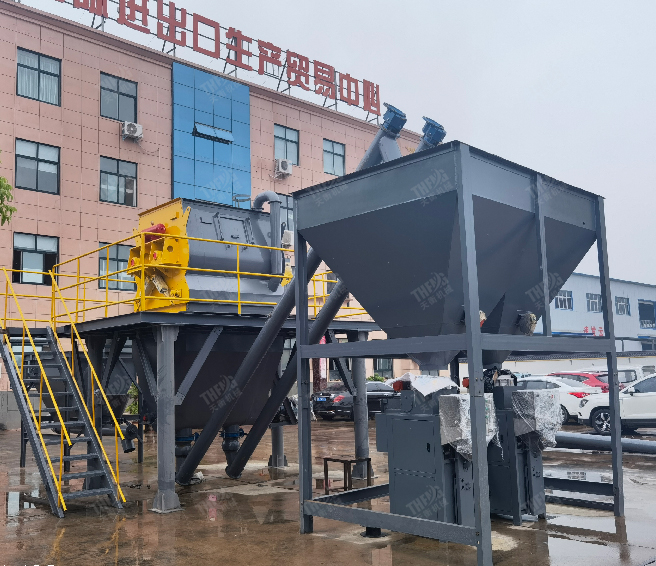
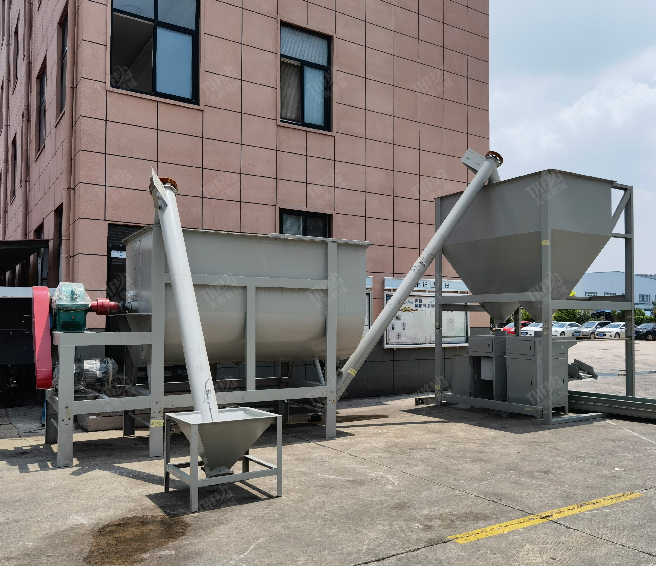
How much automation is cost-effective for a dry-mixed mortar production line?
The answer is not “the higher, the better”, but “just the production capacity and product structure that suit you perfectly”. To sum it up simply:
For an annual production of less than 10,000 tons, with a single product and limited funds → Start with a simple line, first get the business running smoothly, and then upgrade later
For an annual production of 10,000 to 50,000 tons, with 2 to 3 products and stable orders → The semi-automatic line has the highest cost-effectiveness and is the most widely used, requiring 3 to 5 people to produce
For an annual production of more than 50,000 tons, with diverse products and sufficient funds → The fully automatic line is a one-stop solution, with a return on investment within 2 to 3 years, and all subsequent benefits are efficiency gains
If the equipment selection is correct, the equipment becomes an asset that helps you make money; if it is wrong, the equipment becomes a cost burden on the books. Calculate your production capacity, products, and funds clearly, and the “cost-effective” answer will naturally emerge.