
 English
Choosing a suitable mixer is crucial in the field of powder and particle mixing processing. Among numerous devices, the double shaft paddle mixer (also known as the “double shaft gravity free mixer”) has become the preferred choice for many factories due to its unique design and efficient mixing ability. But is it really that useful? The answer is not simply ‘yes’ or’ no ‘, but rather whether it is’ suitable for you’. This article will comprehensively analyze this “powerhouse” device from its working principle, core advantages, potential limitations, and applicable scenarios.
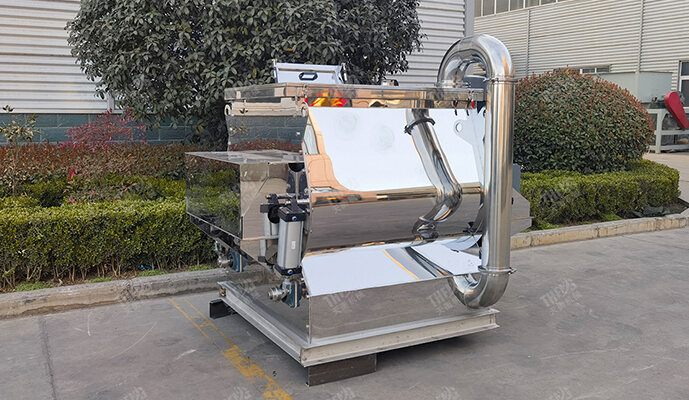
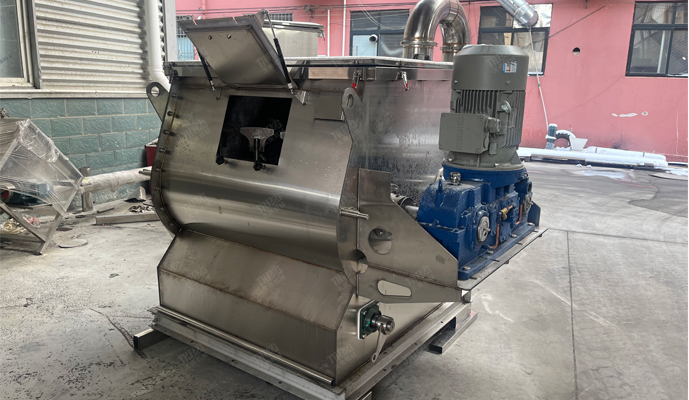
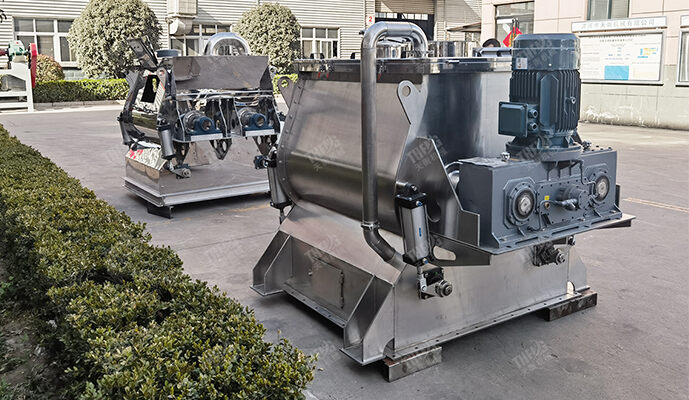
Working principle:
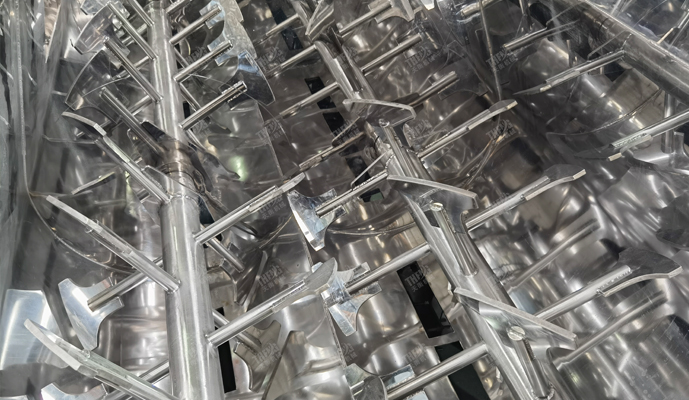
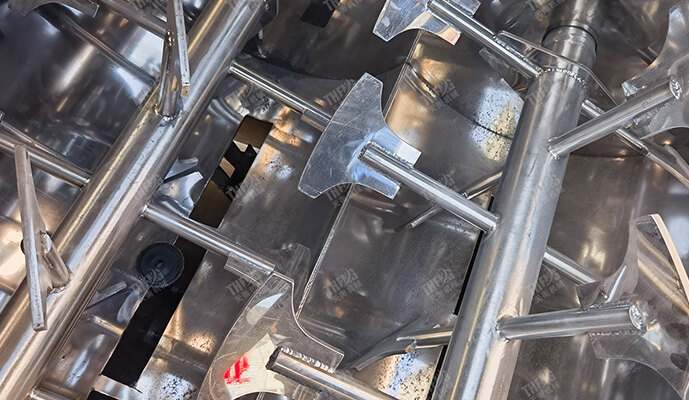
The core design of a dual axis blade mixer consists of two parallel and counter rotating mixing shafts inside the box, which are equipped with multiple sets of blades at a certain angle. The secret to its efficient mixing lies in the creation of a “weightless state” (not completely weightless, but a visual technical concept):
1. Splashing and convection: When the motor drives the dual axis to rotate in reverse, the blade lifts the material from the bottom, forming a continuous “boiling” fluidized layer in the middle of the chassis. Materials collide and interweave with each other in this area, achieving strong convective mixing.
2. Shear and diffusion: The special angle and high-speed rotation of the blade produce effective shear and crushing effects on material clumps, while the scattered material particles achieve rapid diffusion and infiltration in the air.
This combination of convection, shear, and diffusion mechanisms makes the mixing process very intense and fast, far exceeding many traditional mixers.
Core Advantage:
1. Extremely high mixing efficiency: This is its most prominent advantage. Due to its high mixing intensity, it can achieve extremely high mixing uniformity (coefficient of variation CV can be ≤ 5%) in a very short period of time (usually 1-5 minutes), greatly shortening the production cycle and improving production capacity.
2. Good mixing quality: For materials with significant differences in specific gravity and particle size, their strong convection and scattering effects can effectively overcome layering and achieve uniform mixing.
3. “No dead corners” design: The internal structure of the equipment is compact, and the blade design is reasonable, which can ensure that all materials participate in vigorous movement and avoid the problem of uneven local mixing.
4. Clean unloading with minimal residue: Usually equipped with a large opening pneumatic (or manual) unloading door at the bottom, the unloading speed is fast (usually 10-15 seconds), and the residual amount is extremely low, which is conducive to reducing cross contamination between batches.
5. Liquid can be added: many models support adding a small amount of liquid (such as grease and essence) through the liquid spraying system during the mixing process, so as to achieve solid-liquid mixing and more flexible application.
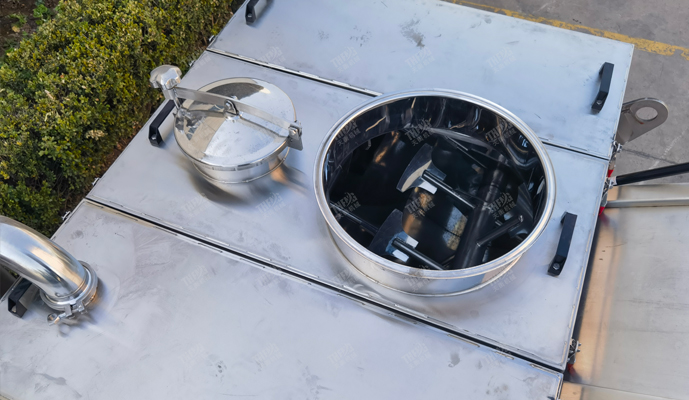
Precautionss:
There is no universal device, and the double shaft paddle mixer also has its applicable boundaries:
1. Not suitable for fragile materials: Intense mixing may break or wear some brittle, crystalline or smooth particles (such as certain grains, candies, plastic particles), affecting the product appearance.
2. Relatively high energy consumption: Due to its high mixing intensity, the driving power is usually higher than that of horizontal screw belt mixers, resulting in slightly higher operating energy consumption.
3. Possible dust emission from ultrafine powders: During the feeding and mixing process, if light and ultrafine powders are processed, violent scattering actions may cause dust, and sealing and dust removal measures need to be taken.
4. Equipment cost investment: Its manufacturing process and structure are more complex than ordinary mixers, and the initial procurement cost is usually higher than that of traditional horizontal mixers.
The dual axis paddle mixer is an extremely “user-friendly” and efficient mixing device, but its “usability” depends on matching the correct application scenario. If you pursue the ultimate mixing speed and uniformity, and the processed materials can withstand their intense mixing strength, then it is your “capable worker” that can significantly improve your production efficiency and product quality. But if your material is fragile and delicate, it may appear “too strong”, and it may be more appropriate to choose milder equipment such as a double helix cone mixer.